
Introduction: Protest as a Signaling Mechanism
I define myself as someone who believes in social change and has participated in protests.
Protest, in its essence, is not an act of rebellion against society, but a legitimate method of
communication between the public and a lawful government. When conducted properly, it
allows citizens to transmit demands, frustrations, and expectations to those in power in a
clear and responsible manner.
From a psychological and social perspective, protest functions as a signaling mechanism.
The public gathers, speaks collectively, and applies visible pressure so that governing
institutions cannot ignore social concerns. For this mechanism to work, the message must
remain intelligible. When protest becomes entangled with vandalism, violence, or
intimidation, the signal is distorted. What was meant to be communication turns into
confusion.
The Trap of the "Revolutionary Mindset"
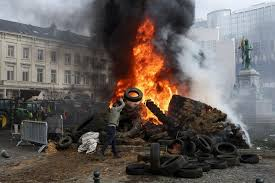
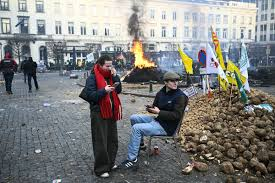
In many contemporary protests, particularly within democratic societies, we observe a
romanticized revolutionary mindset. Protesters often adopt the symbols and behaviors of
historical revolutions, acting as if they are confronting illegitimate or absolutist regimes.
This creates a dangerous illusion: that destruction itself is a political language. In reality, it is
not. It is an emotional release mistaken for political action.
Vandalism does not strengthen a protest; it weakens it.¹ Psychologically, it shifts focus from
collective demands to individual anger. Socially, it alienates the broader public whose
support is essential for meaningful change. Politically, it allows authorities to dismiss
legitimate concerns by reframing the protest as a security issue rather than a democratic
message.
¹Universiteit van Amsterdam. (2024). Total cost of protest damage calculated at 4.1 million euros. Amsterdam: UvA Report.
The Anatomy of Effective Modern Protest
A modern protest should therefore be structured around clarity, visibility, and persistence
rather than disruption for its own sake. Citizens send messages to their governments not
by destroying shared spaces, but by occupying public attention, shaping public discourse,
and maintaining moral legitimacy. Peaceful mass demonstrations, organized civil
disobedience, clear demands, and sustained public pressure are far more effective tools
than sporadic acts of destruction.
Democratic systems already provide multiple channels for response: media coverage,
parliamentary debate, judicial review, and elections. Protest does not replace these
mechanisms; it activates them. When governments fail to respond adequately, protest
should continue—larger, clearer, and more organized—but never collapse into chaos.
Chaos communicates nothing except frustration.
To confuse protest with revolt is to misunderstand both history and the present. Violent
revolt belonged to eras in which no dialogue was possible. Persisting in that model today
reflects not resistance, but an inability to adapt political behavior to contemporary
democratic realities.
Policy Recommendation: Civic Awareness and Education
Beyond responding to protests, governments also bear responsibility for preventing this
confusion. I therefore recommend allocating public budgets to civic awareness campaigns
and investing in public service announcements that explain democratic participation,
protest ethics, and non-violent political expression. Governments should actively use
official communication channels to educate citizens on how legitimate protest functions,
how public demands can be articulated effectively, and how democratic dialogue can be
sustained without resorting to destruction.² An informed public is less vulnerable to
emotional escalation and more capable of rational, constructive political engagement.
²Eurostat (2025). Neighbourhood crime, violence or vandalism in 2023..
Conclusion
In the 21st century, effective protest is not about reenacting the past, but about
understanding the present. It is a disciplined, collective effort to communicate with power,
demand accountability, and pursue reform—without undermining the social order it seeks
to improve.³
What do you think about it?